
Unlock the Benefits of Gas-to-Liquid Technology
Significant natural gas reserves are far from commercial pipelines in locations that make them challenging to access, often leading to flaring and write-offs. For operations in remote fields, associated gas handling or offshore deposits without infrastructure access, this results in lost revenue and wasted resources.
Gas-to-liquid plants convert natural gas into high-value liquid fuels and products on-site, including gasoline, diesel, jet fuel, wax and lubricating products. It’s easy to get these products to market using the same supply chain as conventional petroleum.
GTL conversions offer many advantages, from accessing previously unviable reserves to diversifying revenue streams. This technology has also made it feasible for independent operations to access global markets without the capital constraints that once limited GTL to mega-scale operations. Furthermore, used GTL plants have also become accessible, making it more affordable to use the technology that lets you tap in to remote fields and additional revenue streams.
A Quick Overview of the 5 Advantages of GTL Technology
Unlocking the benefits of gas-to-liquid technology can transform how you monetize natural gas reserves, opening paths to new opportunities.
- Cleaner, higher-value fuels: GTL produces virtually sulfur-free diesel, jet fuel and other products that command premium pricing in their respective markets.
- Freedom from pipeline dependency: Convert gas to transportable liquids on-site and move products by truck, rail or tanker without pipeline infrastructure.
- Access to reserves that were formerly off the table: GTL can shift project economics enough to make previously unviable reserves viable to develop.
- Feedstock flexibility: Process associated gas, flare gas and mixed hydrocarbon streams that would otherwise go to waste.
- Supply diversification: Create a second revenue stream priced against global fuel markets instead of depending entirely on gas or oil prices.

1. Cleaner, Higher-Value Products
Gas-to-liquid plants offer purer outputs. For example, Shell’s Pearl GTL produces products that are virtually sulfur-free and have practically no contaminants such as heavy metals or aromatics. Cleaner products command higher prices, and the value advantage becomes unmistakable when you look at specific end products.
Diesel and Jet Fuel
GTL diesel is a drop-in replacement for conventional diesel. In other words, it works in existing engines and fuel systems without fleet modifications, new infrastructure or compatibility concerns.
These performance characteristics clarify why GTL diesel commands premium pricing.
- Cetane number: The fuel delivers a higher cetane number than conventional diesel, which can improve ignition quality and engine performance.
- Sulfur content: Near-zero sulfur levels eliminate one of conventional diesel’s primary pollutants.
- Total aromatics: Virtually no aromatic content means cleaner combustion.
- NOx emissions: Emissions are 16.1% lower than those of conventional diesel.
- Particulate matter: Particulate output is 34.5% lower than that of traditional diesel.
GTL jet fuel delivers similar environmental advantages. Soot emissions are 86% lower than typical jet fuel, improving air quality near airports and reducing particulate pollution from aviation.
Base Oils and Lubricants
Shell produces GTL base oils that are almost crystal-clear with virtually none of the impurities found in crude-derived equivalents. This clarity reflects a fundamental difference in molecular structure and purity.
Because GTL base oils come from natural gas rather than crude, they deliver high-end synthetic performance with fewer refining steps and lower impurity-removal requirements. This efficiency allows manufacturers to position GTL-derived lubricants in the premium synthetic market while maintaining competitive production economics.
Naphtha and Normal Paraffins
GTL naphtha has a higher paraffin content than conventional naphtha, meaning more plastics yield per liter. Because paraffins are the preferred feedstock for ethylene cracking, higher paraffin content directly translates to higher olefin yields and thus more plastic output per unit volume.
GTL normal paraffins go directly into detergent manufacturing and skip the costly molecular sieve extraction step that conventional producers must perform. Removing a processing stage equals one less capital expense for manufacturers.
Waxes
GTL wax is a high-purity, zero-aromatic product with applications in candles, coatings, adhesives, cosmetics, rubber processing and food-grade uses. It contains virtually none of the impurities found in petroleum-derived waxes — such as sulfur, nitrogen, or aromatics — that typically require additional refining before food-contact approval.
This inherent purity allows GTL wax producers to streamline processing and reach food-grade specifications more efficiently.
The overarching advantage is straightforward — GTL‑derived base oils, waxes and chemicals are exceptionally clean and consistent, generally offering superior performance compared to conventional petroleum equivalents. Higher product quality supports premium pricing and strengthens margins.
2. Freedom From Pipeline Dependency
The United States has multiple categories of stranded gas, including flared associated gas, remote Alaskan reserves, deepwater offshore deposits and difficult-to-reach unconventional reservoirs. These resources are far from pipelines, often in distant locations where infrastructure development is prohibitively slow or expensive.
GTL converts that problem into a revenue stream by allowing producers to create a transportable liquid product on-site. The liquid can move by truck, rail or tanker without requiring pipeline infrastructure.
The outputs can go straight into existing logistics networks — ships, storage terminals and refineries that the conventional petroleum supply chain already uses. There’s no need for special handling, dedicated infrastructure or pipeline construction that may never be economically justifiable.
3. Unlocking Reserves That Were Off the Table
Roughly 1,200 Tcf of unconventional reserves in the United States have become stranded for economic reasons. Developers cast them aside specifically because the cost of development and production is too high compared to the marketplace value of the gas.
Converting low-value stranded gas into high-value liquid products can shift the economics enough to make previously unviable reserves worth developing. A gas field that couldn’t justify development costs at $3 per MMBtu might become viable when you sell diesel at global market prices instead.
4. Feedstock Flexibility
One of GTL’s distinct advantages is its ability to process gas streams that traditionally have little or no commercial value — including associated gas, flare gas and mixed hydrocarbon streams. Instead of requiring pure methane, GTL can convert these lower-value inputs into high-quality liquid fuels.
GTL provides a practical monetization pathway for operators who lack pipeline access or face regulatory pressure to eliminate flaring. Converting flare gas into liquids creates a taxable production stream, turning what would otherwise be waste into revenue while improving environmental compliance.
5. Supply Diversification
This advantage applies primarily to natural gas producers and oil companies seeking to reduce exposure to single-market volatility.
If your entire revenue depends on natural gas pricing, you’re vulnerable to market swings. GTL technology lets you create a second revenue stream priced against global fuel markets. When natural gas pricing is soft, GTL output can still command strong prices if liquid fuel demand is healthy. You don’t have to be a one-product business at the mercy of a single market.
For oil companies, the gas by-product from oil production typically gets flared, reinjected or sold cheaply because there’s no infrastructure to monetize it properly. Global gas flaring reached 151 billion cubic meters in 2024, and the World Bank equates this wasteful burning of gas to the entire continent of Africa’s total annual gas consumption.
GTL gives oil producers a way to turn their by-product into a second revenue stream. Instead of flaring associated gas or selling it at depressed prices, you can convert it to diesel, jet fuel or other products that command higher value.
How Gas-to-Liquid Plants Work
The purpose of gas processing through GTL is to chemically convert natural gas into hydrocarbon products. The process involves three steps that transform gas into usable liquid fuels and chemicals.

Stage 1 — Reforming Natural Gas Into Syngas
In the preparation phase, the process partially oxidizes and steam reforms natural gas to produce syngas, a mixture of hydrogen and carbon monoxide. Syngas is the foundation for everything that follows.
Stage 2 — Fischer-Tropsch Synthesis
The core conversion happens when a catalyst converts syngas into long-chain waxy hydrocarbons. A series of chemical reactions restructures the hydrogen and carbon monoxide in the syngas into these complex, solid-like paraffin waxes. Fischer-Tropsch synthesis, developed in the 1920s, is the proven workhorse of GTL technology, refined over a century of industrial deployment by global leaders such as Shell.
Stage 3 — Upgrading and Product Separation
The final conversion distills the waxy hydrocarbons created by the Fischer-Tropsch synthesis into finished products with different molecular weights and boiling points, including diesel, kerosene, naphtha, base oils and paraffin.
While wax is also a GTL output, it doesn’t require further cracking, as the waxy hydrocarbons are the finished product. Wax producers complete the preparation and core-conversion stages.
The Rise of Small-Scale and Modular GTL Technology
For decades, GTL technology was off-limits to every producer except those in the upper echelon of global energy companies with the financial resources and assets to enable it. Large-scale gas-to-liquid plants, traditionally built atop massive gas fields, are among the most complex and expensive industrial facilities ever built.
For example, Shell’s Pearl GTL in Qatar, the world’s largest GTL plant, has a feedstock of 1.6 billion cubic feet per day from 22 dedicated offshore wells and requires capital investment that puts conventional GTL out of reach for independent producers. Additionally, over 3,500 patents protect Shell’s GTL process.
However, the introduction of modular, small-scale GTL production has changed the landscape by making smaller, more remote gas fields economically viable for the first time. Modular GTL technology can scale to match the size of the targeted resource and integrate easily with existing facilities.
These smaller facilities allow producers to access global markets or supply diesel locally. For example, if you are in a remote area with exceptionally high import costs, you can offer premium diesel at an unrivaled price.
Containerized Design and Rapid Field Deployment
Smaller-scale GTL plants are more than scaled-down versions of a mega plant. Microchannel reactors overcome mass and heat transfer limitations that reduce efficiency at large-scale facilities. The small-scale version is more precise and efficient per unit.
Because it allows workers to fabricate and ship containerized units on-site, GTL technology also enables a modular approach to plant design. That means faster field deployment and quicker time to revenue generation.
The Advantages of Purchasing Used GTL Technology
Capital outlay remains a significant barrier for independent producers, even with the cost reductions small-scale modular GTL has introduced. Buying previously owned equipment addresses the capital challenge without sacrificing operational capability.

Lower Capital Costs Without Sacrificing Capability
Lower up-front costs improve project economics and accelerate return on investment. Since industrial equipment depreciates significantly in its first few years, buyers can acquire well-functioning previously owned machinery for considerably less than its original cost.
For a capital-intensive project such as a GTL plant, that difference can be the deciding factor between a viable project and one that stays on the drawing board.
Immediate Availability
New industrial equipment typically has long lead times, which can represent a significant delay for a producer trying to get a GTL project operational.
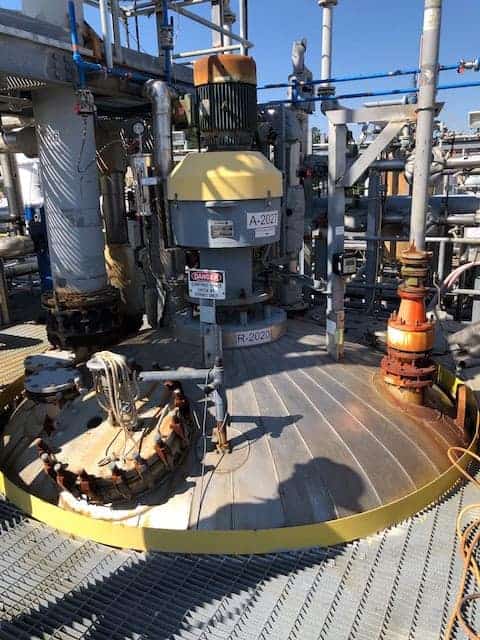
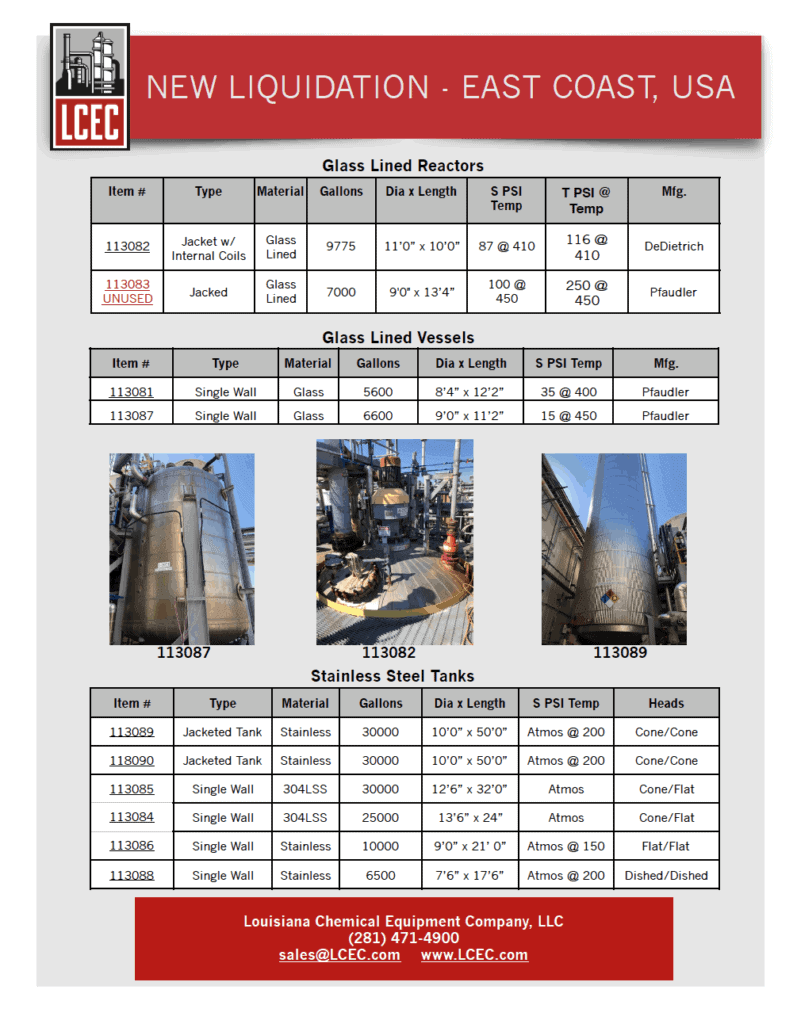
Previously owned equipment from Louisiana Chemical Equipment Company is available for immediate inspection and relocation. This rapid deployment translates directly into a quicker path to revenue generation and accelerated return on investment, enhancing project viability.
For producers dealing with active flaring penalties, expiring gas agreements or time-sensitive project windows, that availability is a genuine competitive advantage. You can make progress now instead of waiting 18 months for fabrication and delivery.

Source Used GTL Plant Equipment With Louisiana Chemical Equipment Company
GTL technology offers a practical solution for monetizing stranded and flared gas while producing premium fuels and products that command higher prices in global markets.
Louisiana Chemical Equipment Company is one of the world’s largest buyers and suppliers of used GTL plant equipment. With over 55 years in business and an extensive inventory of more than 14,000 items, we provide the equipment you need to bring GTL projects online with no lead time and a significantly lower capital outlay than new purchases.
Whether you’re evaluating a small-scale modular GTL installation or sourcing specific components for an existing plant, our team can help you find the appropriate equipment for your operation. Request a purchase or contact LCEC to discuss your GTL equipment needs.