Used Reactors and Vessels
Trust Louisiana Chemical Equipment Company (LCEC) to be your supplier of effective and affordable used reactors and vessels. Since 1968, we have been committed to delivering the best used industrial equipment available to productive operations like yours. Our used equipment is ready for you today, and since we ship internationally, you can rest assured we will meet you wherever you are with the reliable reactors and vessels you need to maintain your workflow.
Used Vessels for Your Industry Needs
When you work with chemicals and specialized operations, you need vessels treated to withstand daily use. Our reactors and vessels for sale are proven resistant to corrosion, extreme temperatures, chemical reactivity and more, allowing us to identify the ideal solutions for your needs. We provide storage tanks, pressure vessels and reactors built to last in industries such as:
- Agriculture
- Waste water
- Pharmaceuticals
- Cosmetics
- Food and beverage
- Plastics
- Chemical processing
Search Our Industrial Reactors for Sale
LCEC’s comprehensive catalog of used equipment features a range of models with unique configurations and enhanced capabilities to support every part of your industrial operations. Our impressive track record has instilled confidence in our customers and keeps them returning to our selection time after time. Find the streamlined equipment primed to save you money and time with these options and more:
- Autoclaves: Autoclaves are sealed chambers critical for sanitizing equipment and preventing the growth of bacteria, spores, viruses and fungi. Our autoclaves can operate in the most sensitive and sterile environments, such as labs and research facilities.
- Cryogenic tanks: Many sensitive materials require ultra-low temperature storage to prevent degradation or decay. Explore our cryogenic solutions for biological samples, chemicals and other temperature-sensitive substances.
- Glass-lined reactors: Working with volatile materials can make finding the right reactor a challenge. Our glass-lined reactors are designed to address this challenge, enabling operation in extreme environments or with reactive chemicals.
- Jacketed reactors: Jacketed reactors use fluid circulation to promote temperature control, enabling long-term stability for storage and monitoring. They are especially useful in organic polymerization and synthesis.
- Stainless steel pressure vessels: We carry a wide range of used stainless steel vessels in various sizes. They are highly sought after for their durability, versatility and natural resistance to corrosion.
- Storage vessels: Whether you need more space for raw materials or finished products, LCEC offers used vessels that create a controlled environment for your needs.
Whatever your operational needs, we’ll help you find a corrosion-resistant solution to store gases, vapors and liquids at the right temperature and conditions.
Frequently Asked Questions
Engineers and procurement managers evaluating used vessels typically ask the following questions:
How do I know if a used tank or vessel meets my specifications?
To know if a used tank or vessel meets your specifications, perform the following:
- Check the nameplate or stamping: This nameplate contains a National Board (NB) number, which serves as a tank’s identity. Ensure this number matches what’s on the Manufacturer’s Data Report (MDR). The MDR indicates the vessel’s capability, such as how much pressure and heat it can handle and what material it’s made of. If the nameplate is damaged, provide documentation, such as drawings, purchase records and old inspection reports, to request a new one.
- Confirm that the vessel is code compliant: When reviewing the records, confirm that they match the required standards and recommendations set by relevant authoritative bodies, such as the American Society of Mechanical Engineers and American Petroleum Institute (API)
- Determine the material construction: Paperwork doesn’t always match the actual vessel, especially when documents have been altered. API’s Recommended Practice (RP) 578 establishes the material verification program, which helps you confirm whether the nameplate refers to the actual metal.
- Find out if the vessel is fit-for-service: The original specifications tell you a vessel’s capabilities when it was new. However, overtime usage may have led to corrosion, reduced wall thickness and other deteriorations. You may need to measure the shell thickness, confirm nozzle size and rating and test fittings and gaskets. API 510 governs in-service inspection, while API RP 572 supplements it by offering detailed, practical guidance.
- Find cracks within the welded seams: Even if the shell thickness, alloy and dimensions match your requirements, weld cracks compromise a tank’s integrity and can lead to leaks. API RP 577 offers guidance on the appropriate methods for finding weld defects.
What is the difference between continuous and batch reactors?
The difference between continuous and batch reactors lies in how materials move through the vessels:
- Batch reactors: With batch reactors, you load the reactants into the vessel and run it for a set period. After a run, you remove the entire batch and clean the vessel before the next operation. This process results in changing reactor conditions, including temperature and concentration changes, so the reactor operates in an unsteady state. The period in between batches serves as downtime.
- Continuous reactors: With continuous reactors, you feed reactants into the vessel simultaneously and continuously. The reactor reaches a steady state as there’s no downtime for cleaning or reloading in between operations.
Batch reactors offer more flexibility since you can use the same vessel for different products. Continuous reactors can be more efficient for high-volume operations.
What are the uses for industrial reactors?
The uses for industrial reactors vary across chemical manufacturing branches. Examples include:
- Petrochemical and fuel production: In these processes, reactors produce crude feedstocks and hydrocarbons into fuels and base chemicals.
- Pharmaceutical manufacturing: Industrial reactors synthesize drugs and active pharmaceutical ingredients.
- Food and beverage processing: Reactors enable the production of food products, such as condiments, juices and dairy.
What documents do I need to check for a used pressure vessel?
The documents you need to check for a used pressure vessel include:
- Nameplate or stamping showing the vessel’s NB number.
- NB registration record.
- Form U-1 or the MDR.
- Form R-1 or the vessel’s repair history.
- Form R-2 or the vessel’s alteration history.
- Original design drawings and calculations.
- Prior inspection reports.
Trust LCEC for High-Quality Used Reactors and Vessels
For over 50 years, Louisiana Chemical Equipment Company has appreciated an impeccable track record with industrial and commercial businesses worldwide. Whether you need used Hastelloy vessels, used Hastelloy reactors, used stainless steel pressure vessels, or another component, our team will help you find what you need to meet your requirements at an affordable price.
Browse our vessels and reactors, and submit a purchase request when you find what you need. If you feel unsure, contact us directly, and our professionals will help you find what you need. You can also call us at +1-866-289-5232 to learn more.
Featured Process Equipment
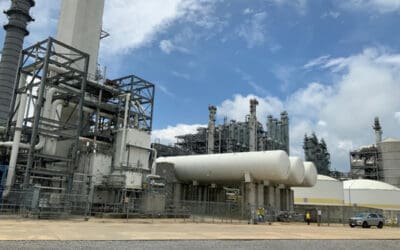
State of The Art PHENOL Plant For Sale
View our recent state-of-the-art nitrogen plant for sale at Louisiana Chemical Equipment Company. Contact us for more information.
State of The Art Nitrogen Plant For Sale
View our recent state-of-the-art nitrogen plant for sale at Louisiana Chemical Equipment Company. Contact us for more information.
State of The Art Nitrogen Plant For Sale
View our recent state-of-the-art nitrogen plant for sale at Louisiana Chemical Equipment Company. Contact us for more information.
Contact the LCEC Sales Team Today
+1-225-923-3602 • sales@LCEC.com • plants@LCEC.com